Every carbon credit stands for one tonne of CO₂ equivalent, but that tonne can come from two very different kinds of climate action. Some credits pay for emissions that did not happen. Others pay for carbon that was taken out of the air and stored. Both can be real and useful, yet they carry different risks and support different claims. In Kenya, where forests, cookstoves, grasslands and coastal mangroves all generate credits, the distinction is worth understanding before any purchase.
What an Avoidance Credit Counts
An avoidance credit, sometimes called a reduction credit, counts emissions that a project prevented compared with a baseline: what would most likely have happened without the project. A forest protected from clearing under a REDD+ project is the usual example. The forest stays standing, so the carbon it holds is not released, and the credit reflects the gap between the protected outcome and the deforestation the baseline assumed. A cookstove project works in a similar way. An efficient stove burns less wood or charcoal for the same cooking, so fewer emissions occur than under the baseline of traditional stoves.
The strength of an avoidance credit depends on the baseline. If the baseline overstates the threat, the credits count reductions that would never have happened. That is why registries ask for detailed baseline modelling, and why buyers should look at how the baseline was set rather than only at the headline tonnes.
What a Removal Credit Counts
A removal credit counts carbon that moves from the atmosphere into a store that lasts. Tree planting and agroforestry are removal projects when new trees grow and hold carbon in their wood, roots and soil over time. Biochar is another removal route: plant material is heated with little oxygen to make a stable charcoal that is added to soil, where it can persist for a long time. The number of tonnes depends on measuring the stock as it grows or as the carbon is stored, not on a comparison with a counterfactual.
The risk for removals is different. The carbon stays stored only as long as the trees, soil or biochar are left in place. Fire, drought, harvest or land-use change can reverse part of the gain. For that reason, removal projects usually hold back a share of credits in a buffer pool. The vintage and permanence guide explains how that works in practice.
Why the Difference Changes the Claim
Avoidance and removal are not interchangeable in a corporate claim. An avoidance credit reduces emissions that would otherwise have happened, but it does not take carbon out of the air. A removal credit does take carbon out, for as long as it stays stored. A buyer who wants to say it has neutralised part of its footprint with removals needs to be sure the credits really are removals. A buyer who uses avoidance credits should describe them as emission reductions tied to a specific project. Our guide to Scope 3 claims covers wording that holds up under review.
The difference also shapes price. Removal credits often cost more to produce because storage monitoring is demanding, while avoidance credits can be cheaper but attract closer scrutiny of the baseline. Price alone is not a guide to quality, so compare the type of credit with the claim you intend to make.
Where Kenyan Projects Fall
- REDD+ forest protection is an avoidance project. Its quality depends on the baseline, the leakage assessment and the forest's long-term protection. See Forests for Climate.
- Clean cooking is mainly an avoidance project. Its quality depends on measured stove use. See how cookstove credits work.
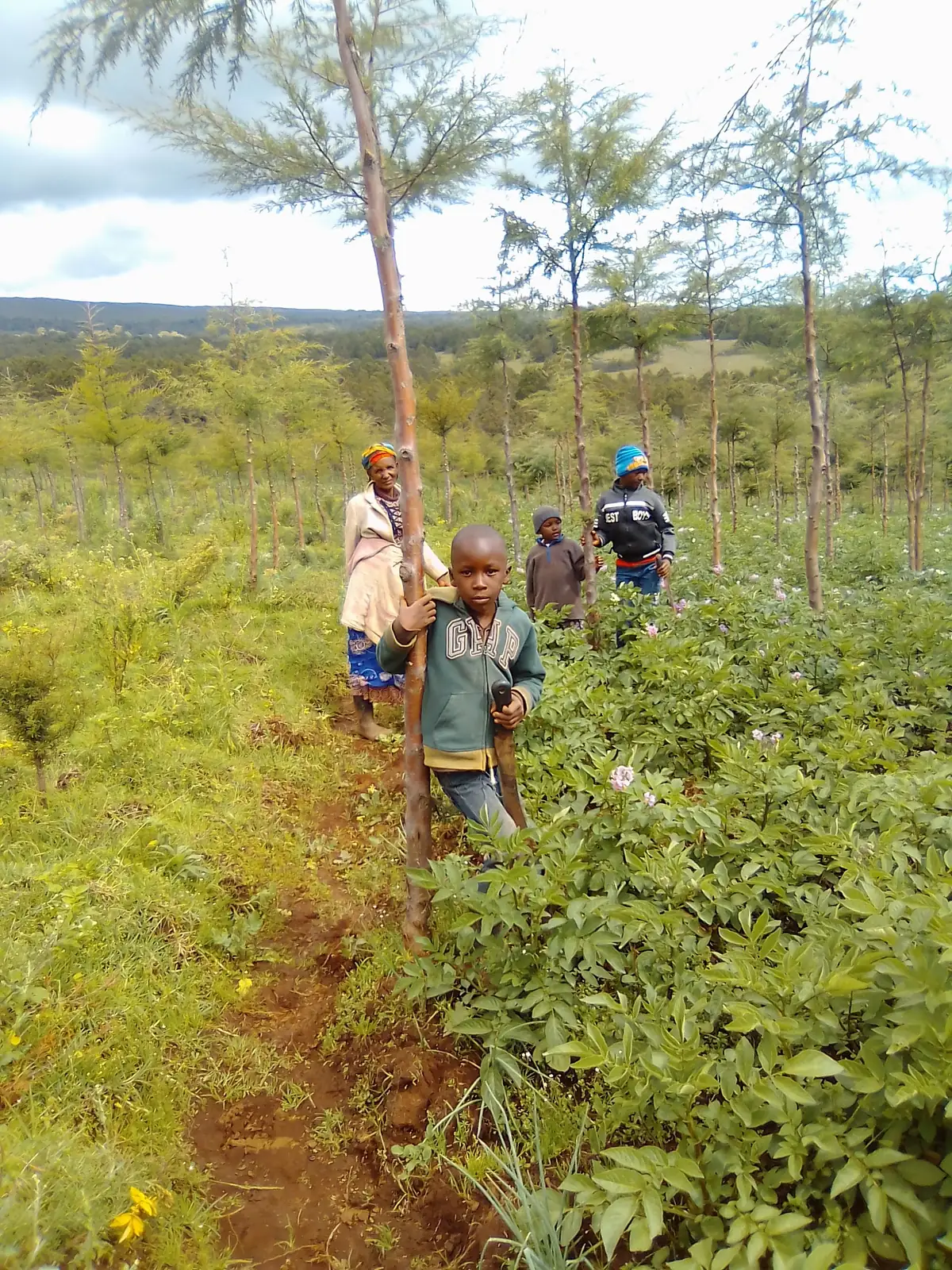
- Tree planting and agroforestry are removal projects. Their quality depends on survival, measurement of the growing stock and the harvest plan.
- Biochar is a removal project. Its quality depends on the stability of the char and on whether it is applied and stays in the soil. See biochar carbon credits.
- Mangrove restoration can combine both: protecting existing stock avoids loss, while replanting adds removals. Check which part each credit reflects.
Questions to Ask a Seller
- Is each credit issued for avoided emissions or for removed carbon, and which methodology applies?
- How was the baseline set, and who reviewed it?
- For removals, how is stored carbon measured, and what share is held in a buffer pool?
- What happens if the forest, stove or stock is lost, and who bears the reversal?
- Can the seller show the registry record that names the credit type?
Frequently Asked Questions
Is one type of credit better than the other? Neither is better in general. Each suits a different claim. Removals are easier to explain as carbon taken out of the air, while avoidance credits can be sound when the baseline is conservative and the protection is secure.
Can a project issue both? Yes. A mangrove or agroforestry project may protect existing carbon and add new stock, so it can issue both kinds of units. The registry record should show how each kind is counted.
Does an avoidance credit remove carbon from the air? No. It counts emissions that did not occur. Describe it as an emission reduction, not as removal.
Before you buy a Kenyan credit, work out whether you need reductions or removals, then check that the credit on offer matches that need. The label on the project matters less than the type of carbon it counts.