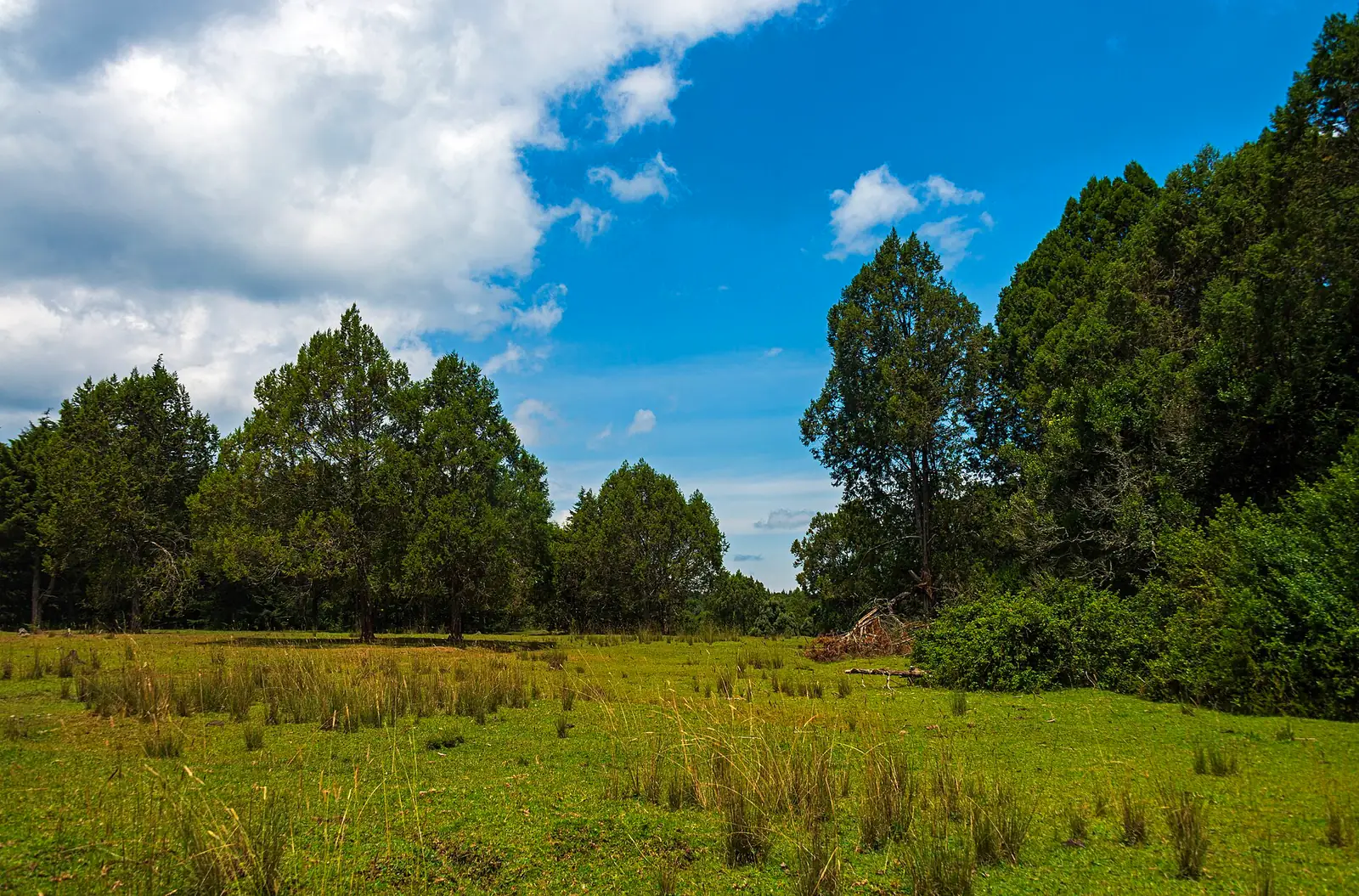
Kenya's forests cover only a small share of the country. The National Forest Resources Assessment of 2021 put forest cover at about 8.8 percent of the land, and tree cover, which also counts trees outside forests, at about 12 percent. The Constitution sets a minimum of ten percent tree cover, and the government has set a target of 30 percent by 2032. Every hectare of forest that is cleared or degraded makes that target harder to reach.
What Forest Conservation Means
Forest conservation is the work of keeping existing forest standing and healthy. It covers stopping illegal clearing, controlling charcoal production, managing grazing and fire, and keeping rivers and water sources protected. It also means restoring forest that has been damaged, so that it can recover its canopy and wildlife over time.
Conservation is often less visible than tree planting. A planting day produces photographs. A forest that has been protected for ten years produces no single moment that makes the news, yet it keeps soil in place, holds water in the catchment and stores carbon in the trees and the ground.
Why Standing Forest Matters More Than New Trees
A mature forest holds far more carbon than a young plantation, and it does so immediately. A newly planted seedling takes years to store a meaningful amount of carbon, and many seedlings do not survive their first dry season. When a forest is cleared, much of its stored carbon is released at once. For this reason, carbon specialists generally treat avoiding deforestation as the first priority, with restoration and planting following.
Kenya's forests also feed its rivers. Highland forests such as the Mau Forest Complex and Mount Kenya act as water towers for farms, towns and hydropower. When the forest on these slopes is lost, rainfall runs off faster, rivers become more unpredictable and the risk of floods and droughts grows.
The Main Threats
- Charcoal and firewood: Demand in towns drives cutting of dryland trees and forest edges.
- Farming and settlement: Forest land is cleared for crops, grazing and housing, often in small steps that are hard to see from a distance.
- Fire: Dry seasons and human-caused fires can damage forest faster than it recovers.
- Weak enforcement: Where monitoring is thin, illegal activity can continue for years before it is caught.
How Communities Protect Forests
The Kenya Forest Service manages gazetted public forests, but much of the day-to-day protection happens with the people who live beside them. Community forest associations take part in managing forests together with the government, and in many places they protect forest through patrols, fire breaks, nurseries and agreed rules on grazing and harvesting. Where families gain a clear benefit, such as fodder, honey, fruit, water or a share of income, they have a reason to keep the forest standing.
Where Carbon Credits Fit In
Some forest projects in Kenya are designed to earn carbon credits by reducing emissions, for example by protecting forest that would otherwise be cut. These projects must prove that the forest was really under threat, that the emissions avoided are real and measurable, and that local communities share in the benefits. Buyers should look for clear baselines, independent verification and published monitoring reports. A credit that cannot be traced back to protected forest on the ground has little value.
A forest credit pays for emissions avoided against a baseline, and that payment supports conservation only for as long as the project is funded, monitored and maintained. Our explainers on REDD+ forests in Kenya and REDD+ across borders set out how these projects are structured, and our guide to benefit sharing explains what fair community terms look like.
Questions to Ask About a Forest Project
- What forest would have been lost without the project, and how is that known?
- Who lives on and uses the land, and how are they involved?
- How is the forest monitored, and are the results published?
- Who decides on the rules for grazing, harvesting and fire?
Frequently Asked Questions
How much of Kenya is covered by forest? The 2021 National Forest Resources Assessment reported forest cover of about 8.8 percent and tree cover of about 12 percent. Figures from the FAO differ because they use a different definition of forest, so the source matters when comparing numbers.
Is forest conservation the same as planting trees? No. Conservation keeps existing forest from being cleared or degraded. Planting adds new tree cover. Both are needed, but protecting a standing forest usually delivers results sooner.
Does buying a forest carbon credit pay for conservation? Only indirectly. The credit pays for emissions avoided against a baseline, and the project's own funding and monitoring keep the forest protected. Check the project's monitoring reports and benefit-sharing terms before assuming that a purchase protects a specific forest.
Can a forest be protected and still be used? Yes. Many community forests allow sustainable harvesting of fodder, fruit, honey and poles under agreed rules. The aim is to keep the forest healthy while people benefit from it.
A forest that is still standing is the cheapest carbon store, water source and wildlife home Kenya has. Protecting it is work that has to be done every year.